

Living Well
Index
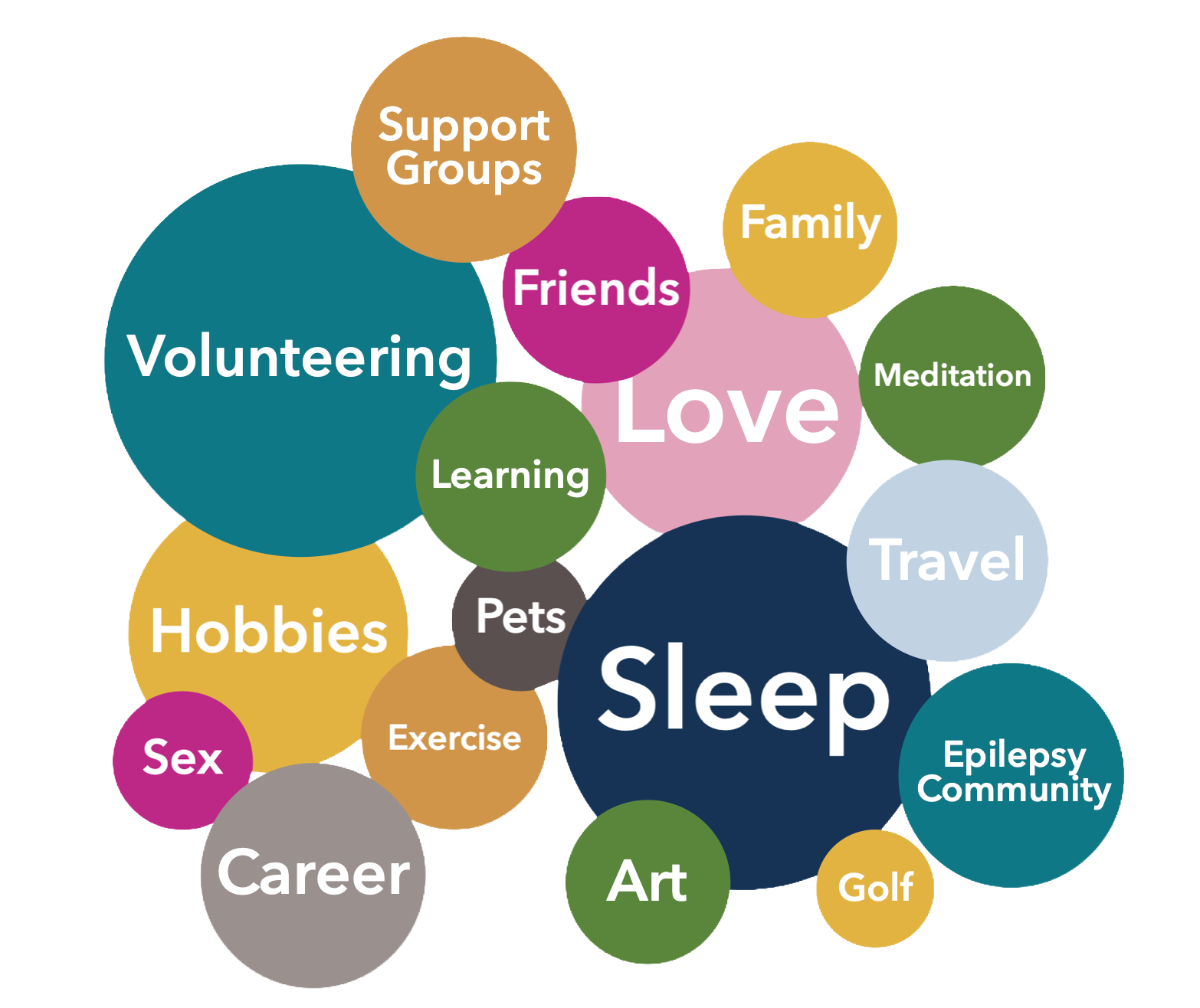
There are so many things that go into living well… Living with epilepsy can make life unpredictable, isolating, and frustrating. Prioritizing living well practices is something your neurologist would prescribe if they could. If you have any living well comments or ideas, please reach out to me directly at: kelly@suddenblackout.com
How to Tell Others You Have Epilepsy
By Marc Starnes
Telling people about your epilepsy -- family, friends, dates, coworkers -- almost always pays off in the long run. Ideally, wait until you can talk about it with confidence. Sometimes that's not possible, and that's okay too.
If someone pulls away from you because of your health, you just learned something valuable: they're not who you want in your life long-term anyway. The world is full of other more accepting people.
One honest caveat: in some situations, such as employment or legal issues, the timing of your disclosure matters. Use your judgment on when, not whether.
Below are my four levels for telling others about your epilepsy. Start with level one, and if the person shows interest in learning more, move to the next level, and so on. Adjust the levels to fit your circumstances.
-
Initial Disclosure
This most casual explanation occurs with coworkers, neighbors, workout buddies, friends — anyone who'd be nearby if you have a seizure.
Begin with the basics, including how long you’ve had epilepsy.
"Hey, I just want to let you know I have epilepsy. I've had it since..."
Then explain what they might expect to see. Describe it in your own words, without medical terminology, like you're talking to a fifth grader. Cover what happens before, during, and after. That's what calms fears and prepares them.
"When it happens, I typically..."
"Don't panic, but if it happens, here's what I need from you..."
Insert your preferences, including what to do, what not to do, who to call.
For example, "If I have a seizure, there’s no need to call an ambulance because..."
-
A Fuller Picture
An additional 5 to 10 minutes, if they want more information.
Walk them through what actually happens, mentally and physically, before, during, and after a seizure. Tell them how often you have them.
Never drop a term without explaining it.
If you say "tonic-clonic," follow it immediately with what that means for you, in plain language.
People have a range of understanding of what "tonic-clonic" or "grand mal" or other seizure types mean. Most of what people think they know comes from watching one seizure on TV.
Make it clear that no two people's seizures are the same.
Then share the parts that go beyond an active seizure, such as word recall, memory problems, anxiety, no alcohol, no driving.
-
Going Deeper
This explanation provides an additional 10 to 15 minutes if they show interest.
Tell them briefly how you've worked through the emotional side of epilepsy, how it's affected you, maybe how it's made you stronger. Be open. Start by asking if they have questions.
I usually add my favorite line here:
"When you get 5 percent of your life taken away, you treasure the other 95 percent. Yes, I can no longer [fill in the blank] - but I appreciate life so much more now, and I don't let the little things bring me down like they used to."
Confidence and looking relaxed help. But if you don't pull that off, don't be hard on yourself. Just being open is the part to be proud of.
I also recommend cracking a joke to display your confidence and put the other person at ease.
-
Reciprocal Sharing
Sharing goes both ways. Ask your friend about challenges they have faced and how they responded. Thank them for listening and not being too judgmental.
You may be shocked at how often your friend may open up to you with issues that are huge to them. Once you open up, then friendships strengthen and allow the conversation to go both ways.
In the end, thank the person you are speaking with for accepting your epilepsy. Remind them that while you have experienced challenges from epilepsy, you are still strong.
The Four Levels of Sharing
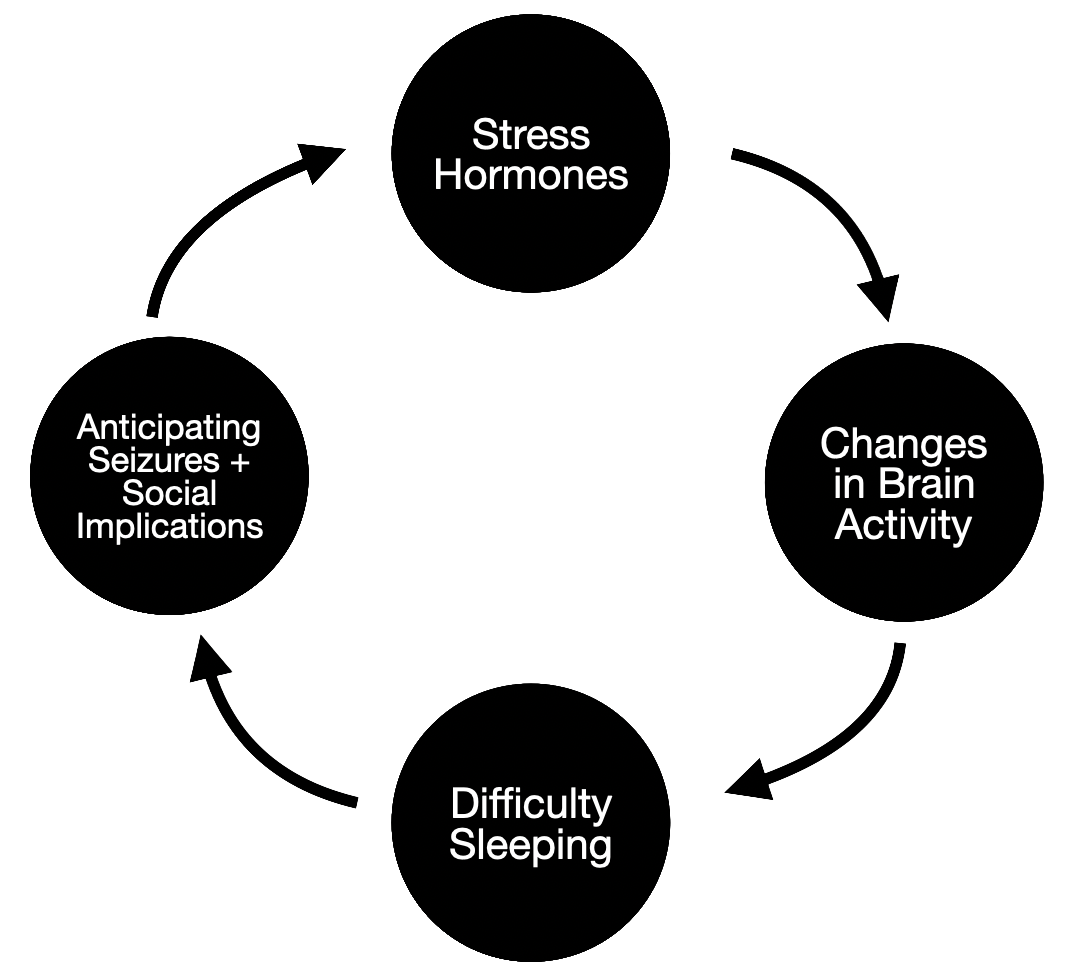
If you live with epilepsy, this circle probably looks familiar. It's the stress/seizure cycle, and it's one of the cruelest catch-22s of this condition: each stage feeds the next, and the last stage feeds right back into the first.
Here's how it moves. Stress triggers a surge of stress hormones like cortisol and adrenaline. Those hormones don't stay contained — they alter electrical and chemical activity in the brain, the same kind of activity that governs seizure threshold. That changed brain activity makes it harder to fall and stay asleep, and sleep deprivation is itself one of the most reliable seizure triggers there is. Now you're lying awake anticipating a seizure — worrying about when it might happen, who might see it, what it means for your job, your driving privileges, your independence. That anticipation and social pressure is stressful. Which produces more stress hormones. And the circle closes on itself.
Nobody hands you this diagram at diagnosis. You're told to "manage your stress" as if that's a simple to-do list item — while living with a condition that manufactures stress at every stage of its own cycle. Breaking it usually means interrupting the loop somewhere: better sleep hygiene, medication adjustments, therapy for the anticipatory anxiety, or honest conversations with your care team about what's actually driving the pattern. You can't white-knuckle your way out of a feedback loop. But you can learn where to cut into it.
The Stress/ Seizure Cycle

Depression
People with epilepsy face a 2 to 3 times higher risk of developing depression compared to the general population, with active depression affecting roughly 20% to 30% of individuals, and clinical or drug-resistant cases seeing rates climb as high as 30% to 50%.
We’ll talk about it, find out why it’s not talked about more, what could be causing it, and how we can fix it.

Epilepsy and isolation go hand in hand, whether you’re around people or not, and almost nobody warns you about that part.
The seizures get all the attention. The loneliness gets none. But ask anyone living with this condition, and they'll tell you: the isolation can be as heavy as the diagnosis itself.
Some of it is practical. Lose your driver's license, and you lose spontaneity — no more "I'll just swing by." You're suddenly dependent on rides, transit schedules, and other people's availability, and every social invitation comes with logistics attached. Some of it is protective. Crowded rooms, flashing lights, late nights, alcohol, missed sleep — the very ingredients of a social life can double as trigger warnings. So you start declining. Not because you don't want to go, but because the math of going feels risky. And after enough no's, people quietly stop asking.
And some of it is fear — on both sides. The fear of seizing in public, in front of coworkers, on a date, at your kid's school event. The fear of becoming the story people tell afterward. Meanwhile, friends and family, unsure what to do or say, sometimes pull back too. Not out of cruelty, but out of awkwardness. The result is the same: a slow shrinking of your world that nobody chose on purpose and nobody names out loud.
Here's the truth: isolation isn't a character flaw, and it isn't inevitable. It's a predictable side effect of a condition that society still doesn't know how to talk about. Connection — with people who actually get it — is one of the most protective things you can build. That's a big part of why this community exists. You don't have to explain yourself here. Pull up a chair.